The Age of Loneliness
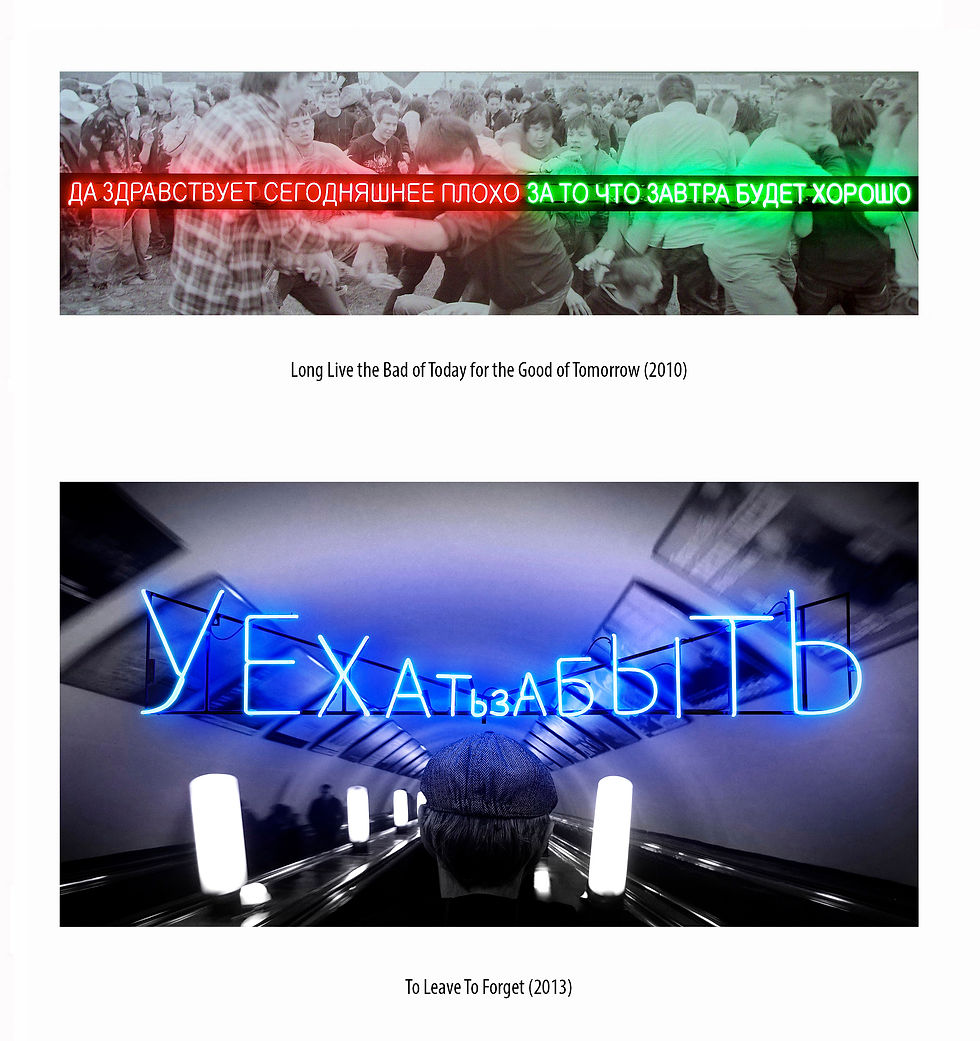
Bratkov’s second decade in Moscow saw a significant body of works in which images were juxtaposed with neon-light texts to create ambivalent tensions and mental ruptures. The first, produced in 2010, consisted of the neon slogan Long Live the Bad of Today for the Good of Tomorrow set against a panoramic image of a raucous social gathering — a Soviet propaganda slogan curiously reincarnated in the late Putin era. Yet the darker the decade became, the emptier Bratkov’s images appeared, while their messages and neon-lit nerve grew increasingly intense. Significantly, many works from this period aesthetically echo the conceptual, imperative, text-based paintings of the influential non-official artist Eric Bulatov, who explored similar notions of deadlock, escape, and freedom in the late Soviet era of stagnation. For instance, To Leave To Forget addressed the mounting dilemma of the time between literal and ‘internal’ migration. Apparently responding to Putin’s notorious claim “we are not there” (regarding the annexation of Crimea), We Are Not Here suggested a broader ethical, social, and historical disorientation. In turn, The Good Buys Evil (based on The Moscow Times) commented on the cynical subversion of values, while The Age of Loneliness conveyed an increasing sense of helplessness and solitude in the face of an impending, larger-than-life catastrophe.
2010–2019. Series of 5 mixed-media installations with neon light. Dimensions variable.


Commentaires